How it works
Four steps. The first one is free.
WhyStrohm takes over the media for founder-led companies: one brand, made for every channel, every month, all in your name.
The steps
What you get, in order.
- The company film: Free, about a minute long
- Apply. If it fits, we make a film of about a minute about your company, from your own site, in your brand and your words. The call comes after, with the film in hand. You keep: the film.
- The Sprint: One week
- We read the market and the company, decide what it says, and write the plan for the site and the media. One fixed fee, and it counts toward the Setup. You keep: the written plan and the brand specification.
- The Setup: Scoped by the Sprint
- We write your brand into the system, build the templates for every channel, connect your accounts, and make the first round of media with it. One fixed fee, scoped by what the Sprint finds. You keep: the brand specification, the templates and every account, in your name.
- The Retainer: Monthly, first term ninety days
- We make the media for every channel, every month, check it against your brand, publish it with your approval, and write up what shipped and what the numbers did. You keep: each month's media and the report.
Everything is in your name from the first day. If you stop, you keep all of it.
The Sprint is one fixed fee, and it counts toward the Setup. The Setup is one fixed fee, scoped by what the Sprint finds. The Retainer is monthly, with a ninety-day first term. Add-ons are scoped and priced on their own. Ad spend, when there is any, is separate and goes straight to the platform, in your own ad account. Prices are on the call, in writing.
Add-ons
Add when you want them.
- Ads
- When a piece has held attention, we put money behind it, in your own ad account.
- Site upgrade
- A new or rebuilt site on your domain, so the media sends people somewhere that holds up.
- The system, yours
- We hand the system to your team, with the files to keep it going.
The seven steps
From reading the market to what the response said.
- 01 · SprintA read on the market
The business and its market, read first
What your buyer already reads, watches and shares, read before anything is made.
- 02 · SprintA written specification
What the company says, sharpened and written down
The positions that were never written down, decided and captured. Two people can produce the same brand from the file.
- 03 · SetupThe brand, set up
Your brand, written into the templates
The specification becomes the templates for every channel, set up in your accounts. If the site needs work, a site upgrade is an add-on.
- 04 · SetupEvery format
The media around it, made from what you already know
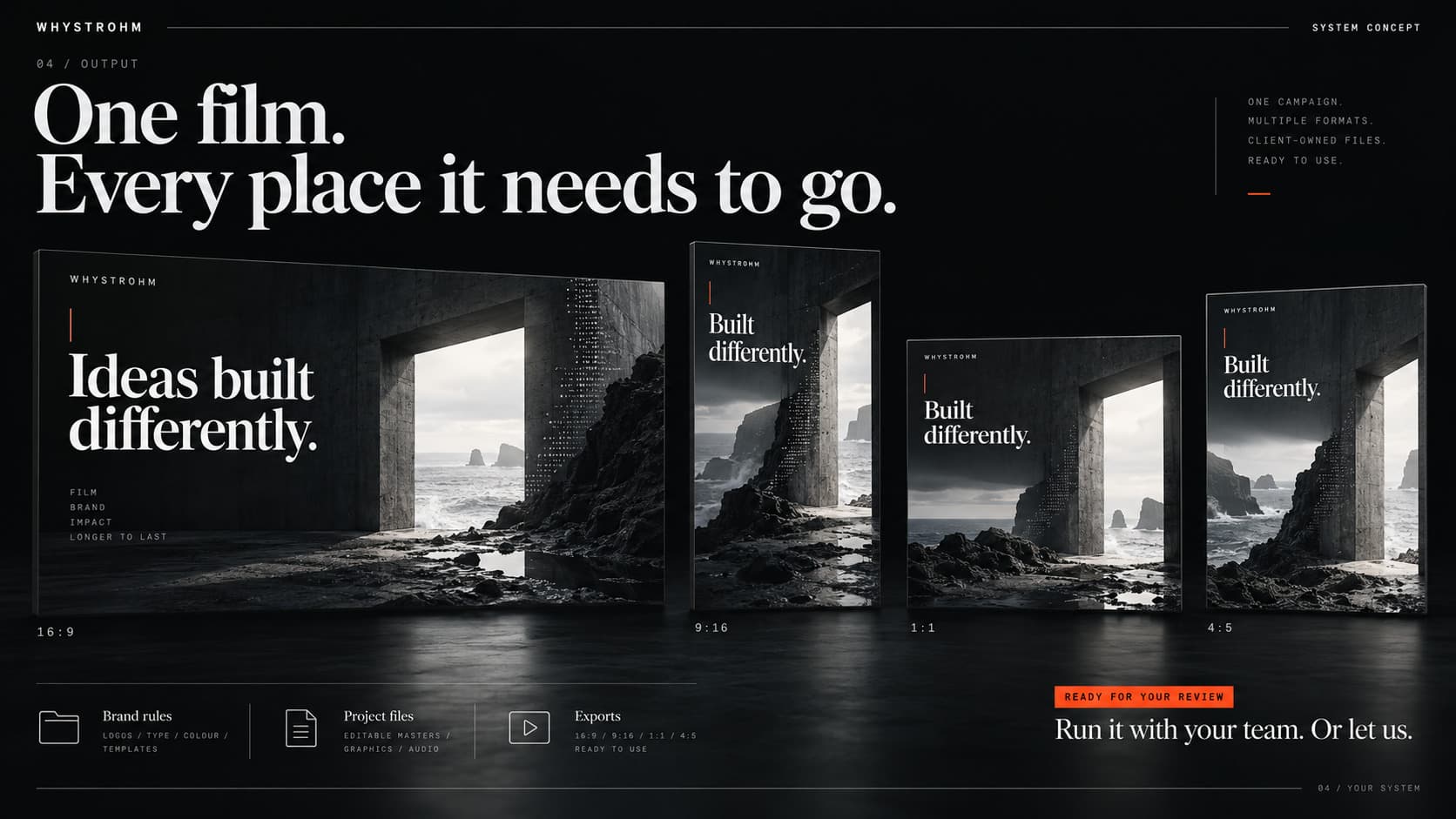
One source session becomes every format the channels need. The tenth piece costs what the first one did.
- 05 · RetainerPublished work
Your approval, then publishing on the cadence
A draft with a blocked term never reaches you.
- 06 · RetainerA reading
What the response actually said
Which pieces held attention and which did not, written down on a fixed rhythm.
- 07 · RetainerA sharper next round
The next round is aimed by the last one
The reading changes the specification, the angles, and sometimes the site.

Stage five, in practice
What a guardrail looks like when the words matter.
One client is a recovery training company. In that field the wrong noun is not a tone problem. It is a credibility problem with the people the work exists to serve.
Blocked, cannot publish
- addict
- clean
- abuse
- substance abuser
- junkie
Required instead
- person in recovery
- sustained recovery
- recovery support
- person-first language
The list is his, in his repository. The full account is on the case study.

The brand specification
What you keep, whoever runs it.
- The specification
- A written file in a repository under your account, from the first commit onward
- The term lists
- The blocked and required language, versioned in the same repository
- The templates
- The render config that produces every format, so the outputs can be rebuilt
- The accounts
- Every channel, login and analytics property in your name, never ours
If the Retainer ends, or the operator is unavailable, only the cadence stops. Anyone you bring in starts from these files, not an interview. You can check all four on the first day.
Fit
What it takes from you.
- One person who can say yes
- Nothing publishes without a named person's approval. If every post routes through a committee, that approval becomes the constraint.
- The raw material
- Someone from the business on camera, or the material to work from. A company that wants media with nobody from the business in it is better served elsewhere.
- Access to your accounts
- Your site, your domain and your channels. The system is set up inside them.
- Your call on every claim
- What is true about your company, and what you are willing to say in public, is yours to decide.
- A person on anything costly
- Regulated claims, anything about a named person, and anything you would have to walk back go to a person by default.
Further reading
Want this for your brand?
Start with your company film.
Apply. If it fits, we make a film of about a minute about your company, from your own site, in your brand and your words. The call comes after, with the film in hand.